

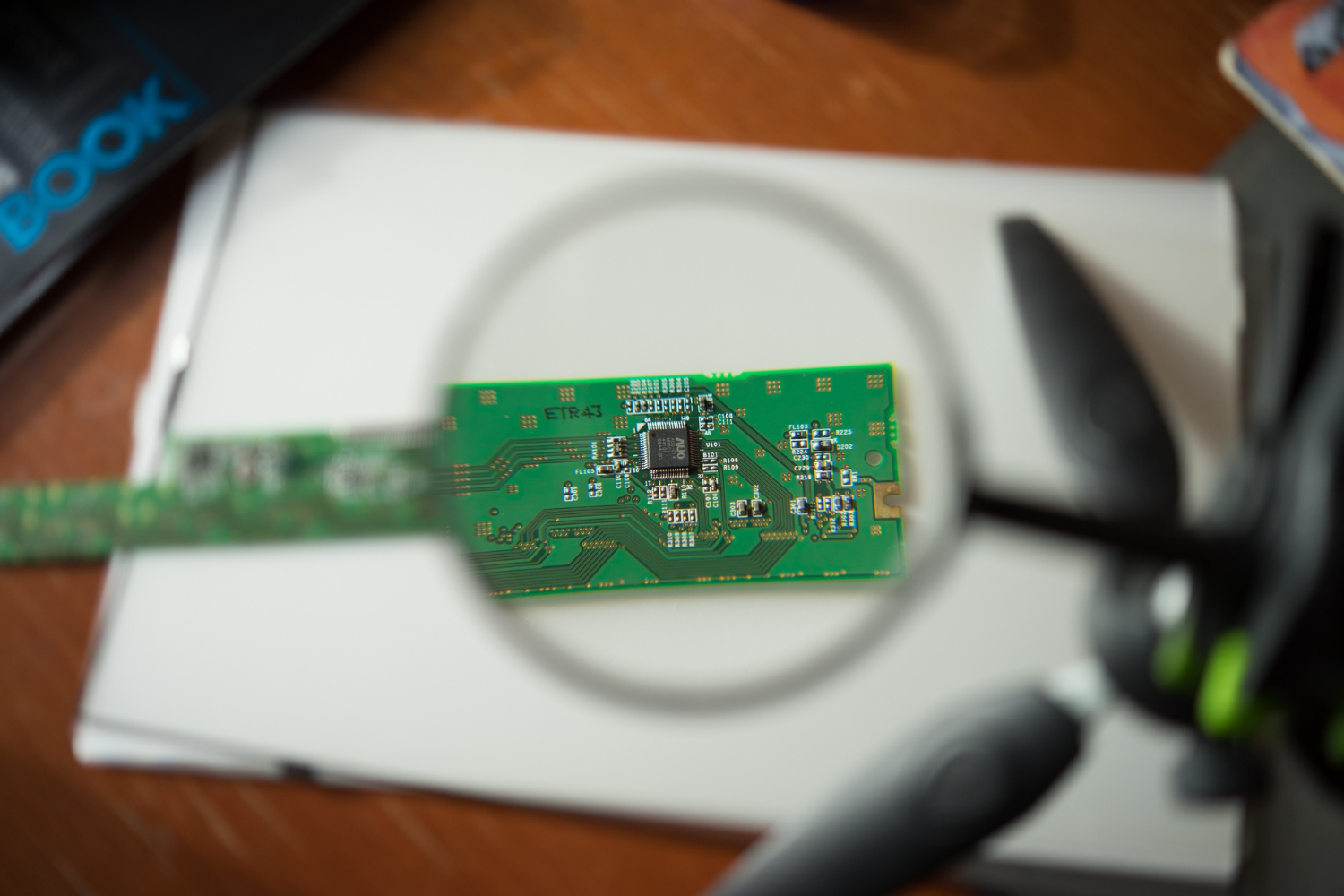
Embedded systems have become the backbone of modern electronic products, enabling intelligent control and automation across a wide range of applications. From smart home appliances and wearable devices to industrial automation systems and autonomous vehicles, embedded technology plays a crucial role in delivering efficiency and functionality.
At the core of these systems lies a processing platform responsible for data handling, control, and communication. Among the various technologies available, Microcontrollers (MCUs) and Field-Programmable Gate Arrays (FPGAs) are two of the most widely used solutions. Although both are designed for embedded applications, they differ considerably in architecture, performance, flexibility, and development methodology.
So, how do you decide which one is the right choice for your embedded system?
What Is a Microcontroller and Why Is It So Popular?
A microcontroller is a compact integrated circuit that combines a processor, memory, and input/output peripherals on a single chip. It is designed to execute dedicated tasks within embedded systems through software programming.
Popular microcontroller families include PIC, AVR, Arduino, and ARM Cortex-M series, which are extensively used across industrial and consumer applications. Microcontrollers operate by executing instructions sequentially and are programmed using high-level languages such as C and C++.
Their ease of programming, low power consumption, and cost-effectiveness make them ideal for applications such as home automation systems, IoT devices, medical instruments, and industrial control equipment. Due to their simplicity and the availability of extensive development tools, microcontrollers have become the preferred choice for many embedded system designers.
What Makes FPGA Technology Different?
A Field-Programmable Gate Array (FPGA) is a semiconductor device composed of configurable logic blocks and programmable interconnections that can be customized after manufacturing.
Unlike microcontrollers that rely on software execution, FPGAs implement digital hardware directly, enabling highly parallel and deterministic processing. FPGA devices are programmed using Hardware Description Languages (HDLs) such as VHDL and Verilog.
They provide the capability to create application-specific digital architectures and are widely used in advanced domains such as telecommunications, aerospace, artificial intelligence, signal processing, and robotics. Their ability to execute multiple operations simultaneously makes them suitable for applications requiring high computational speed and real-time performance.
How Do Their Architectures Compare?
The primary distinction between a microcontroller and an FPGA lies in their processing methodology.
Microcontrollers follow a sequential execution model, where instructions are processed one after another. Although modern microcontrollers may incorporate multiple cores and specialized peripherals, their operation remains fundamentally software-driven.
In contrast, FPGAs employ parallel processing, allowing multiple hardware blocks to function simultaneously. This capability enables several tasks to be executed concurrently, resulting in significantly higher throughput and reduced latency.
Such architectural differences provide FPGAs with a clear advantage in applications involving intensive data processing and real-time computation.
Which Platform Offers Greater Flexibility?
Microcontrollers provide flexibility through software modifications. Developers can update or enhance functionality simply by changing the firmware without altering the hardware architecture. This makes them highly suitable for applications that require periodic software upgrades and feature enhancements.
FPGAs offer a much deeper level of customization by allowing engineers to redefine the hardware itself. Designers can create custom processors, communication interfaces, and hardware accelerators tailored to specific requirements.
This hardware-level flexibility makes FPGAs particularly valuable in applications demanding unique architectures and optimized performance.
Which Delivers Better Performance?
Performance requirements often determine the choice between a microcontroller and an FPGA.
Microcontrollers are highly efficient for control-oriented tasks such as sensor interfacing, motor control, display management, and communication protocol implementation. Their performance is generally limited by clock frequency and software execution speed.
FPGAs, however, excel in high-speed and computationally demanding applications. Since operations are implemented directly in hardware, they offer extremely low latency and superior processing capability.
Applications involving image processing, digital signal processing, machine learning acceleration, and high-speed communication systems benefit significantly from FPGA-based implementations.
How Do Power Consumption and Cost Compare?
Low power consumption is one of the strongest advantages of microcontrollers. They are optimized for energy-efficient operation, making them highly suitable for battery-powered systems such as wearable devices, portable electronics, and IoT sensors.
FPGAs typically consume more power due to the presence of numerous programmable logic resources and routing elements. Although modern FPGA technologies have improved energy efficiency, they still require significantly more power than conventional microcontrollers.
From a cost perspective, microcontrollers offer a highly economical solution for mass-produced products. Their low component cost and simplified development process contribute to reduced overall system expenses.
FPGAs, on the other hand, involve higher device costs and require more sophisticated development tools and expertise, making them comparatively expensive.
Is FPGA Development More Complex?
Development complexity is another important factor when selecting an embedded platform.
Microcontrollers are programmed using familiar software languages such as C and C++, supported by a wide range of Integrated Development Environments (IDEs), libraries, and debugging tools. This results in shorter development cycles and makes microcontroller-based systems easier to design, test, and maintain.
FPGA development requires knowledge of Hardware Description Languages (HDLs) such as VHDL or Verilog, along with digital hardware design concepts. Designers must perform synthesis, place-and-route, timing analysis, and hardware verification before deployment. As a result, FPGA development is generally more complex and requires specialised expertise and longer development times.
Where Are Microcontrollers and FPGAs Commonly Used?
Microcontrollers are extensively used in home automation systems, smart appliances, IoT devices, automotive control units, medical monitoring equipment, and consumer electronics. Their low cost and energy efficiency make them suitable for a wide range of control applications.
FPGAs are widely employed in high-speed communication systems, artificial intelligence accelerators, image and video processing systems, aerospace and defense applications, advanced robotics, and industrial automation platforms. Their superior computational capability makes them indispensable in performance-critical environments.
Which Platform Should You Choose?
Both microcontrollers and FPGAs play a vital role in modern embedded system design.
Microcontrollers provide simplicity, low power consumption, and cost-effective implementation, making them ideal for control-oriented and consumer applications.
FPGAs, with their parallel processing capability, hardware-level customisation, and exceptional performance, are well suited for computationally intensive and high-speed applications.
Selecting between an FPGA and a microcontroller ultimately depends on the application’s requirements, including processing performance, power consumption, development complexity, and cost constraints.
As embedded technologies continue to evolve, both platforms will remain indispensable tools for engineers developing the next generation of intelligent and connected electronic systems.
For aspiring embedded engineers and professionals looking to build expertise in both microcontroller and FPGA technologies, gaining practical, hands-on experience is just as important as understanding the theory. At IPCS Global, learners have the opportunity to work with industry-relevant development platforms, real-world projects, and expert guidance that bridge the gap between academic knowledge and industrial applications. Whether your career goal is embedded systems, IoT, robotics, industrial automation, or advanced digital design, acquiring practical skills in both microcontroller and FPGA development can provide a strong foundation for success in the rapidly evolving electronics industry.
0 Comments